When Central Banks Step in: A Trader’s Guide to Currency Intervention

Central banks play a huge role in Forex and CFD trading as they define monetary policy, which, in turn, establishes cash volumes in economies. Professional traders often use this information before making decisions. Among various tools that central banks use, currency intervention is something that you should focus on, as it allows you to make informed decisions based on the central bank’s current activity. When an intervention is conducted, you know exactly whether to buy or sell an asset at specific levels, and you can clearly see it on charts. By reading this article, you will learn more about the nature of currency interventions and how to spot them and use them when trading binary options and CFDs.
Contents
- 1 What Is a Currency Intervention?
- 2 Use Currency Interventions to Trade with Binolla!
- 3 How Interventions Move the Price
- 4 How to Know that the Intervention Is in Place Before the News
- 5 Examples of Interventions
- 6 The Rule to Survive Intervention for Traders
- 7 Conclusion
- 8 FAQ
- 8.1 How do I know if an intervention happened if central banks are silent?
- 8.2 Why doesn’t Japan just raise interest rates instead of intervening?
- 8.3 Can the US help Japan intervene?
- 8.4 How long does an intervention’s effect usually last?
- 8.5 Does Switzerland still intervene?
- 8.6 Can I trade interventions on binary options?
- 8.7 What is the biggest mistake traders make during interventions?
- 8.8 Is intervention trading profitable?
What Is a Currency Intervention?
A currency intervention by a central bank is when they buy or sell currency to reach its exchange rate goals. For instance, to support the national currency, a central bank can buy it on the market, creating additional demand. If the Fed or the Bank of Japan officials think that their national currency rates are too high, they can, in turn, buy other currencies and sell USD or JPY in order to create additional supply.
Interventions are not conducted all the time. Most of the time, central banks are able to manage everything by verbal interventions or monetary policy steps like hiking or cutting rates, or saying that they are going to change the rate because of high inflation or slow economic growth. However, when they are unable to introduce such steps, or they are not enough to reach their goals, they begin to buy or sell currencies to change the situation.

Use Currency Interventions to Trade with Binolla!
Join Binolla and start trading with a reliable and safe brokerage
Start nowCentral banks’ interventions are mostly successful because they have unlimited reserves of money. They spend billions of dollars, yen, pounds, euros to achieve their goals, and in most cases, they are able to deal with the situation. The key central banks that conduct interventions are BoJ and SNB.
How Interventions Move the Price
Now that you know about what a currency intervention is, it is time to move further and watch how it actually drives the price. A standard intervention effect on prices can actually be divided into three main steps:
- The splash. This phase emerges in the first five minutes and is characterized by a sharp price movement. It goes right after the intervention and can be clearly found on charts. You will see a strong one-sided price movement without any swings that is not supported by any current fundamentals. This is not the best period to trade; however, if you are lucky to catch this move, you can try to engage as the profit is almost guaranteed in this period, regardless of whether you are trading CFDs or binary options.
- The price drift. The next stage lasts for one hour or several days. When the initial intervention takes place, hedge funds and major banks step back, leaving the market as all market participants are scared that the central bank will continue its intervention steps to reach the goal. The price quietly moves to the level that the central bank defends, and this is a great opportunity for traders to step in again.
- Consequences. The truth is that central banks are often unable to hold the price for a long time. If this happens, you will see the price moving in the opposite direction of the central bank’s goal. In this situation, you can try to join the market or wait for another intervention to engage.
How to Know that the Intervention Is in Place Before the News
Central banks to not announce interventions in most cases to avoid market panic. However, there are some signs and indicators that will help you understand that the intervention is in place.
Japan’s Current Account Report
The first footprint that you can explore is the Current Account report that is published on Sundays by the Bank of Japan. This report shows how much liquidity is flowing through the system. On normal weeks, the number may be 200 billion yen, which is comfortable. However, if the intervention took place on Friday, then the numbers will significantly jump by 500 billion or even five trillion yen.
This report appears before Monday’s session start, which means you can check the numbers and know in advance that the Ministry of Finance conducted an intervention.
Rate Check
Another indicator of a possible intervention is a meeting with the five biggest banks in Tokyo when the Bank of Japan asks the banks’ governors about their current USD/JPY rate. When this happens, the price freezes. The reason is that bank officials do not want to get called by a regulator. If you see that the chart is almost frozen for 5-10 minutes, then a rate check is in place.
Deposit Spike
The Swiss National Bank publishes reports on Thursdays. They are known as Sight Deposits. These are funds that are held by commercial banks on the central bank’s deposit. Normally, Sight Deposits grow by half a billion every week. However, if the SNB starts to buy euros to weaken the franc, then this number spikes by up to five billion per week. In 2011, for instance, those who followed Sight Deposits could see such a spike right before the SNB announced its 1.20 cap on the EUR/CHF rate.
Examples of Interventions
1998: BoJ Intervention that Almost Worked
The Asian financial market was in full panic in 1998. The USD/JPY pair reached 147, a level that was inappropriate for Tokyo, and the Ministry of Finance decided to intervene. They coordinated their intervention with the US Federal Reserve and bought yen together for three days. The first day brought no success as the rate returned to 147. However, the central bank continued with intervention for months to put the pair down to 111. The first intervention was just a warning to the markets, while further steps were real action.
2011: The Famous Intervention by the SNB
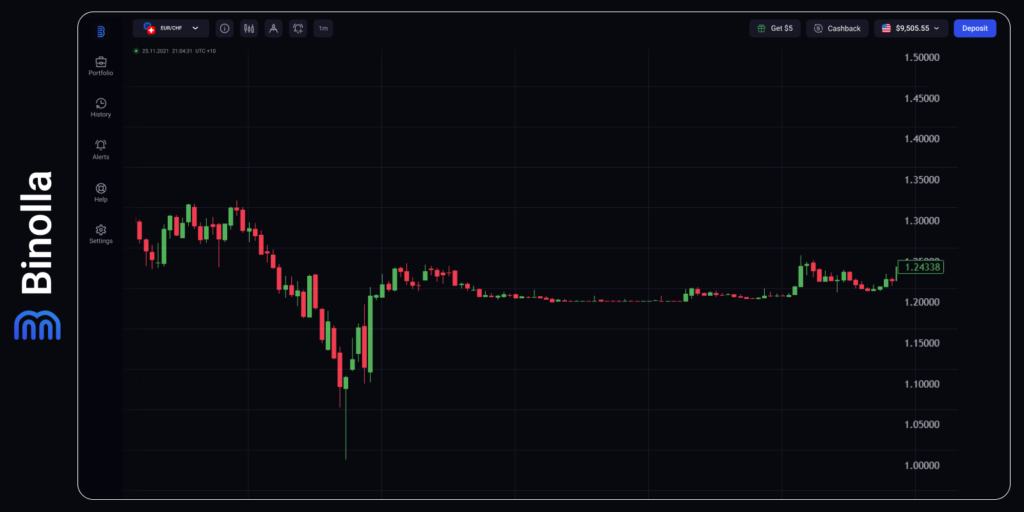
Another illustrative example took place in 2011. The Swiss franc becomes too strong at 1.03 against the euro. Therefore, this put pressure on the Swiss economy, including ski resorts, hotels, and other sectors. The Swiss National Bank decided to intervene. They have said that they will buy euros until the rate reaches 1.20 francs. As you can see on the chart, the EUR/CHF price spiked below 1.00 but then recovered and reached 1.20 and held there for a long time. Yes, the price moved even higher, but this was not a central bank concern anymore. SNB just watched 1.20 to avoid franc appreciation below this level.
In January 2015, the SNB finally gave up, and the franc surged by 30% a day. Those who watched sight Deposits could make money on this event.
2022: The BoJ Intervention
In October 2022, the Bank of Japan intervened three times. Each time the price stepped from 152 yen and dropped 400 pips. Traders who closely monitored the Current Account report could see that the central bank is trying to save the situation. However, on Thursdays, the rally faded. This setup was available three times in one month. Traders could enter Monday night and exit on Wednesday.
2026: The Golden Week
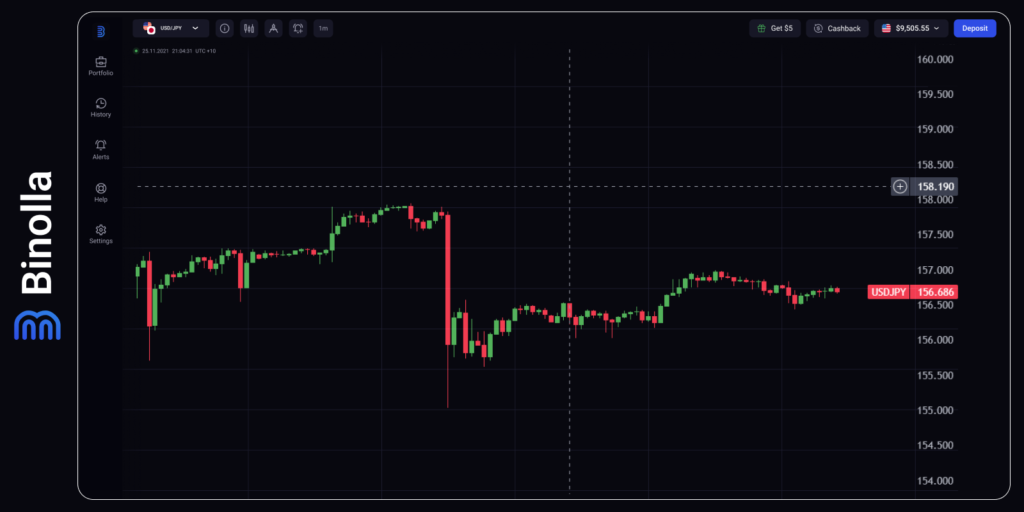
The Golden Week is a string of national holidays in Japan. However, in 2026, it coincided with a strong intervention. The Bank of Japan warned markets long ago that they won’t let the yen drop above 160 against the US dollar. On April 30, 2026, the dollar moved above 160 against the yen, and then, the yen jumped from 160 to 155 just within hours. The move was very sharp, and it was clear that the central bank initiated an intervention.
The intervention happened during the Golden Week, which is a string of national holidays in Japan. Trading volumes were thin, and the Japanese government chose this moment deliberately. In this situation, when the liquidity is low, the chances for successful intervention were significantly higher.
Traders could predict this intervention in advance. Japan’s Finance Minister Katayama gave some signals to financial markets. She told to carry smartphones at all times. Another signal came from Mimura, the top currency official who issued a final evacuation advisory. Then the intervention took place.
According to Bloomberg and other sources, the volume of intervention was 5.4 billion yen, which is one of the largest single moves in history. By now, the intervention is not over. The regulator still supports the yen exchange rate and has conducted several interventions on May 1 and May 4. According to some notable bank officials, Japan can continue interventions and make about 30 moves at this scale.
The Rule to Survive Intervention for Traders
The one thing that you should understand when an intervention occurs is that it can slow down the trend but not reverse it. The Bank of Japan, the Swiss National Bank, or any other central bank may have unlimited reserves of their currencies as they can print whatever quantity they need.
However, they do not have unlimited reserves of foreign currency to be sold. For instance, the Bank of Japan may print trillions of yen, but they have no access to unlimited US dollar sources. Therefore, at some point, the intervention will stop, and if fundamentals continue to put pressure on the national currency or support it, then the central bank will be unable to intervene anymore.
The difference between interest rates in the US and Japan favors the US dollar. At some point, the dollar will regain its strength and the USD/JPY pair will resume its uptrend. Therefore, the Bank of Japan will have to raise rates in order to stop this process.
The rule is that when you see an intervention, you should remember that this is not an unlimited process, and you should also check other fundamentals. The intervention may slow down the trend, but if fundamentals are against the currency, then the downtrend will continue even after the intervention ends. This happened in 2015 when the SNB was unable to hold the 1.20 cap, and the EUR/CHF pair moved down.
Conclusion
Trading central bank interventions can be very profitable. However, you should always be on guard and focus on fundamentals. While interventions bring a lot of volatility and liquidity due to money inflow, they can also be very dangerous for traders. Therefore, you should follow the news, all the available reports, and step in when you understand what is hapenning. Trading during interventions can be profitable for both binary option and CFD traders. However, you should clearly understand current trends and be aware of rate differentials and other important things that may push the price after the intervention ends.
FAQ
How do I know if an intervention happened if central banks are silent?
You will see it on charts. A sharp price movement in currencies without any clear fundamentals means that the central bank is conducting an intervention. Also, you can watch Monday’s Current Account report in Japan to understand what’s happening.
Why doesn’t Japan just raise interest rates instead of intervening?
The thing is that the Bank of Japan is conducting stimulative steps with low rates. Moreover, the massive government debt of 260% of GDP is much more expensive to service. Therefore, intervention is used as a temporary step.
Can the US help Japan intervene?
Yes, currency interventions are sometimes conducted by two central banks. Coordinated steps are more powerful. When two banks engage instead of one, the effect lasts longer.
How long does an intervention’s effect usually last?
This depends on the volume and other important aspects. An intervention may provide short-term spikes or push the price lower or higher for days or even weeks.
Does Switzerland still intervene?
According to SNB officials, the central bank rarely announces interventions. However, traders still watch Sight Deposits reports, and if there are spikes in these reports, the SNB may conduct an intervention.
Can I trade interventions on binary options?
Yes, sure. You can trade interventions on whatever financial instrument is available. Moreover, with binary options, you can catch the very first movement and make it an almost risk-free trade.
What is the biggest mistake traders make during interventions?
The biggest mistake is to miss the initial spike or try to trade intervention for long. Even if the effect lasts, there is no guarantee that the price will continue the move.
Is intervention trading profitable?
Yes, sure. However, you should understand that interventions are not conducted every day. Therefore, you should be patient and check sources to understand when the next one may take place.