Handling Losses: Why Accepting Losses Is the Price of Winning in Trading

Traders always think about profits when they place trades. While this is normal, understanding that losses are also part of the game is crucial. No strategy can give you 100% profitable signals, and even if you expect perfect results from a trading system, it may fail at some moments. Therefore, traders should understand the reality and embrace it. Even with losses in their trading series, they can still be profitable in general. One or two losses per session will never ruin their balance, but for those who are not prepared, they can lead to harsh consequences. By reading this article, you will learn how to handle losses and why accepting them will still make you a profitable trader.
Ready to trade digital options? Don’t hesitate and register at Binolla. Place your trades on a reliable trading platform!
Contents
- 1 Losses Are Your Business Expenses
- 2 Trading Is About Probabilities
- 3 Trade your best trades with Binolla!
- 4 Fighting Losses Can Be Dangerous
- 5 Use Risk Management to Create Psychological Safety
- 6 Don’t Treat Losses as Punishment
- 7 Emotional Detachment as a Professional Trait
- 8 How to Start Trading Safely
- 9 Conclusion
- 10 FAQ
Losses Are Your Business Expenses
Some beginner traders consider losses as something scareful and they start thinking that this is their personal failure. However, when treating trading like a business, your mindset can change. A useful way to avoid emotional pressure when having losses is to consider them as business expenses. Let’s say you run a cafe. You buy food, launch ads, and make some upgrades. But in reality, part of your food may be wasted, ads may not meet your expectations, and brings less clients than you expect.
Being an owner of an online business, you will buy ads. Some of your campaigns will bring you more clients, while some will fail. Your task as a businessman is to analyze which campaign performs better and why you lose money in your other campaigns. You do not leave the business just because you have made some bad decisions. You just learn from them to avoid them in the future.
The same is for trading. You make a profit, and some losses may occur. Professionals never stop when they have losses. They analyze and evaluate so that the profit-to-loss ratio will be even higher. A loss is not something that should stop you. You can’t make perfect decisions all the time. The idea is that when losses occur, you should take all possible knowledge from them to avoid such mistakes in the future.
Trading Is About Probabilities
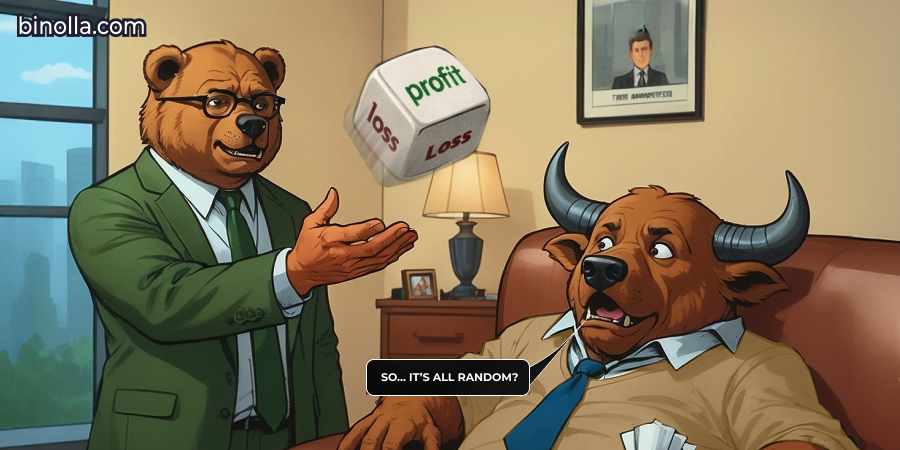
The next thing that one should remember is that trading is not about sure things! Even major banks, when they make their forecasts and their traders open positions, fail. A retail trader will also fail at some points. No matter which strategy you use. The only way to become a successful trader is to understand that losses are a part of the game. The most important thing is your strategy’s performance over time. Professionals never focus on a single trade. They evaluate the effectiveness over time.
A good example is the Turtle Trading Method designed in the 1980s by Richard Dennis and William Eckhardt. The idea was that they could teach everyone trading if their students stuck to a strategy and followed its rules exactly. The experiment was successful as several students, including Tom Shanks, Jerry Parker, and Ralph Vince, became successful traders and even owned their own trading firms/funds. As the experiment shows, discipline and strict adherence to the strategy rules bring success.
Professional traders think about trading as about probabilities. They focus on long-term results instead of thinking about single losses. For instance, if you open 10 trades in digital options and you lose 3 of them, then your 7 trades may be profitable, which means that you will make money in general. By investing $10 in each trade, you will lose $30 and make $63. Therefore, your results will be $33 per session, which is not bad at all.
Many beginners fail just because they are attached to each losing trade. This makes them break their rules, trying to win back quickly, which, in turn, leads to negative consequences. Not measuring success by a single outcome is a trait of a professional trader. Instead of thinking about the bad things that just happened, you should focus on your risk and money management, as well as think about how to improve your entries.
Trade your best trades with Binolla!
Join Binolla and enjoy perfect trading conditions with a reliable brokerage
Start nowAdditionally, when a trader thinks about trading as a game of probabilities, they detach emotionally from every single trade and maintain discipline. They do not treat losses as their personal failure and work on their long-term edge. This helps traders shift their focus from losses and create a professional mindset.
Fighting Losses Can Be Dangerous
Trying to chase losses is one of the instincts that may ruin their trading entirely. In CFD trading, this comes in the form of moving stop losses or averaging down. In digital option trading, this comes in the form of doubling the position size after a loss (Martingale). The problem is that both approaches may lead to heavier losses, and you may end up finding that your balance is empty. Chasing losses might feel like taking control, but this is no more than emotional trading.
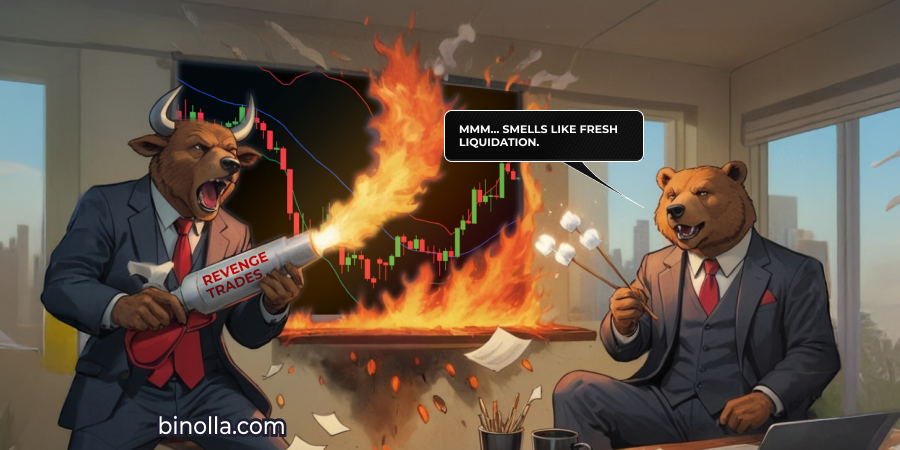
Revenge trading is another symptom of bad behavior for trading. After closing a losing trade, the market participant may decide to enter another trade just to cover previous losses. This may create a chain of losing trades, and your balance will evaporate quickly. One of the most important negatives in this approach is that each next trade is opened without proper analysis. If you bought a Lower contract, for instance, you may try to cover your losses with a Higher one without even looking at charts.
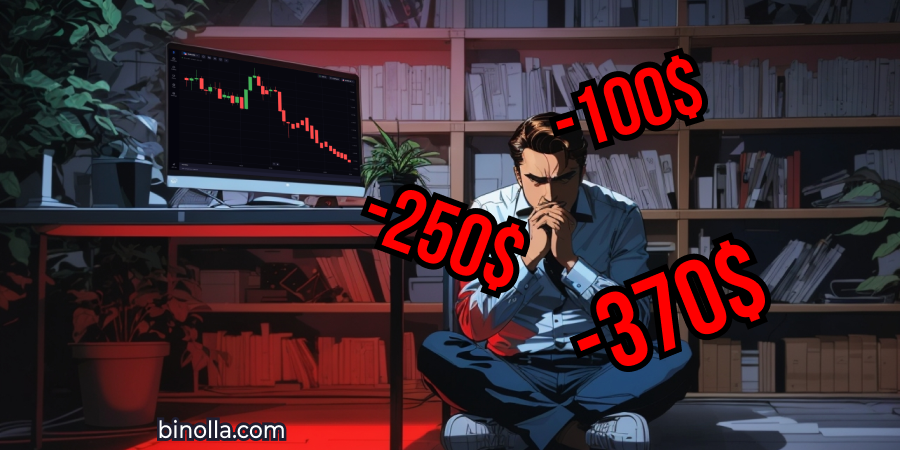
By accepting losses, you will not only protect your capital but also save your mental energy. Focusing on losses will create this feeling of failure, which may prevent you from sticking to your strategy and finding good trading opportunities in your future trades. You should keep in mind that fighting losses is fighting reality. The market does not care about your personal feelings or thoughts. The more you resist, the more risks you take when placing trades.
Before going to the next chapter, here are some of the key mistakes that traders make when they try to fight losses:
- Using Martingale. To chase losses, traders apply Martingale and double up their positions after a loss occurs. This can lead to higher risks and increase your capital exposure.
- Revenge trading. Traders open a new trade right after they have a loss. This leads to more losses as such decisions are rarely based on analysis.
- Overtrading. Placing more trades to cover losses is a bad idea. You increase pressure and spending, while the quality of your analysis becomes worse.
- Sticking to losing trades. CFD traders often widen stop losses, hoping the market will reverse in their favor. That’s a bad idea that will lead to higher losses.
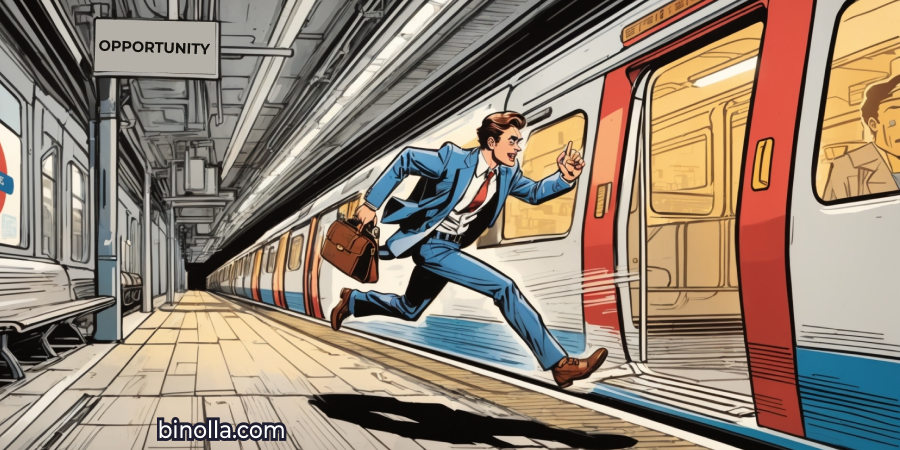
- FOMO. Fear of missing out is one of the worst enemies of traders, especially those who were beaten by the market during the previous session. Captured by FOMO, traders tend to seize the next opportunity, and in most cases, they fail simply because they do not analyze, and their actions are influenced by the fear of not being in the market because something important will occur.
Use Risk Management to Create Psychological Safety
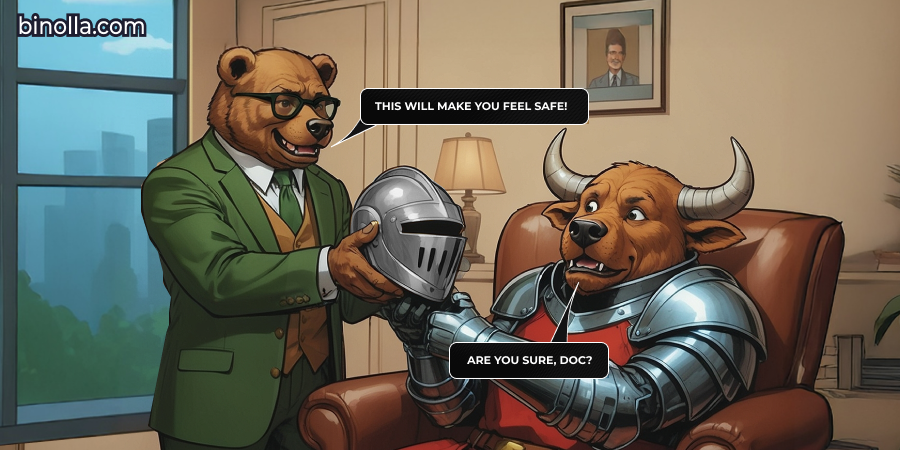
One of the best tools you can apply to handle losses is proper risk management. Without properly controlling your position size in digital options trading or placing stop losses in CFD trading, you risk losing a major part of your balance, and, which is more importantly, losing your confidence. Thus, risk management is not only about protecting your account, but also about creating a special mindset that is based on confidence and discipline.
The basic rule of risk management is to limit your position size to what you can afford to lose. Professional traders often risk no more than 1-2% of their total deposit size. By doing this, they reduce risk exposure and can avoid panicking if things go out of control. This is due to the fact that you understand that even a loss or two will not destroy your account. Therefore, you will be able to maintain discipline and avoid emotional reaction. There is no need to chase losses as they are minor.
For CFD traders, risk management involves placing stop losses to protect their positions from higher risks. For instance, if you buy EUR/USD at 1.1800 and place a stop loss at 1.1780, then you will lose 20 pips only if your forecast was wrong. Proper risk management transforms trading from a high-stress activity to a system where you can expect gradual balance growing over time.
Don’t Treat Losses as Punishment
One of the biggest mistakes that many traders make is that they think that losses are punishment. Each losing trade contains a lot of useful information about what worked and what didn’t. Moreover, you can see what can be improved in your strategy if you decide to work on your mistakes. This makes losses not a punishment, but a useful tool that allows you to upgrade your trading system.
Beginner traders often make repeated mistakes. If they ignore the lessons that losing trades give them, they will still remain on the same level, trying to fight losses instead of learning from them. By analyzing losing trades, you can find weak points in your strategy and adjust them timely manner.
For instance, if you see that a lot of your trades fail when you open them during important economic news releases, where volatility is growing, and patterns may fail, then you can adjust your strategy and avoid entering trades at those times, placing them before or after important news releases. By such adjustments, you can strengthen your trading plan and avoid such mistakes in the future. Moreover, by recognizing losses, you may fight the fear of entering positions. This will allow you to regain control over your trading activities and build a stronger and more profitable approach to trading.
Emotional Detachment as a Professional Trait
One of the best ways to handle losses is to develop a skill known as emotional detachment. With this skill, a trader cares deeply about sticking to the plan and executing trades according to their system. Such traders remain neutral to their single results, whether they are losing or winning trades. This doesn’t mean that you will remain indifferent. The idea is to maintain control in every situation and keep emotions low, whatever decisions a trader makes.
A lot of beginner traders can’t improve their performance, not because they don’t know a strategy well or don’t have a strategy at all. The first thing many market participants do is to learn technical analysis and find entries according to some indicators, patterns, and all other tools that they use. However, what they do wrong is to become emotionally attached to one trade and one loss. Over time, this may lead to overtrading, attempts to win back, breaking risk and money management rules, and other negative consequences. When applying the detachment approach, a trader can break this cycle and start thinking big instead of micromanaging each position.
If a trader consistently follows their trading system and plan, a single loss or even a losing streak will never ruin their trading results in general. By applying a detached approach, they will remain focused on their global goals. Such traders will stop, analyze their previous trades, looking for what can be improved. They will never get back to trading before they understand what was done wrong and what should be updated.
Trading habits such as journaling trades or setting strict stop losses can be helpful in handling losses and developing this detachment approach. The process should be separated from the outcome, which is crucial.
By applying a detachment approach, one will switch from reactive and stress-filled trading to a consistent process where all the steps are controlled with the lowest level of emotional impact. Once you develop such a skill, you will notice how your results change over time.
How to Start Trading Safely
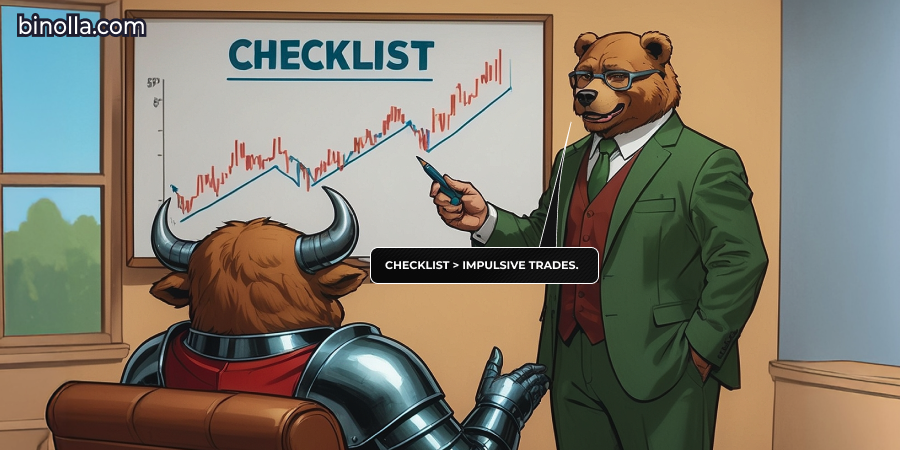
Now that you know more about how losses should be treated in trading, time to give you some final recommendations. Here they are:
- Use the demo for trading. You can place your first trades on the demo to get familiar with the platform and even practice some strategies.
- Read our blog and watch videos. This will allow you to learn more about the main analysis tools and create your own trading strategy.
- Follow money management rules. Do not put at risk more than 1-5% of your overall deposit.
- Use bonuses. Benefit from the additional funds that a platform offers. For instance, you can get a 90% welcome bonus at Binolla that you can trade with and withdraw profits without any conditions or limitations.
- Plan your trading in advance. This will allow you to have a plan that you can rely on and avoid overtrading or revenge trading.
- Evaluate your results. Take time and check your outcomes, especially after losing trades, to see what can be improved.
Conclusion
Embracing losses is not about being weak. It is a sign of your trading maturity and professionalism. You should understand that losses are a part of the trading routine. However, how you respond to them is the key and what makes a difference between a beginner and a skilled market participant. You should remember that trading is not about winning each particular trade. By being obsessed with individual outcomes, you risk falling into an emotional trap and ruining your balance quickly. Being able to handle your losses will allow you to maintain discipline and make rational decisions in trading, which, in turn, will allow you to grow your balance over time.
FAQ
Can I have losses with a good and reliable trading strategy?
Yes, losses in trading are inevitable. You can’t be successful in every single trade. Markets are about probabilities and not about certainties. Professional traders focus on their long-term results rather than being obsessed with their single outcomes.
How to deal with a losing trade?
Consider each loss as feedback, not your personal failure. Traders should stick to their plan and review each trading session to find what can be improved rather than trying to win back.
Is risk management helpful in handling losses?
Yes, if you apply proper risk management rules, you can mitigate the impact of any single loss, which will allow you to grow your balance over time. You will stay more disciplined and focused.
What can I learn from losses?
Analyzing losing trades will allow market participants to find mistakes and tackle them. Traders adjust their strategies based on patterns in such losses to improve their results.
Why is detachment important in trading?
Detachment allows you to separate your emotions from your trading results. Instead of looking at a single outcome, you will watch your performance over time and focus on execution, trading system, and your balance.
Can I avoid losses in trading?
You should understand that losses are an inherent part of trading. You can’t avoid them entirely. What you can do is to make them improve your strategy and trading approach in general. Traders should maintain emotional control to improve their performance and grow in the financial markets.